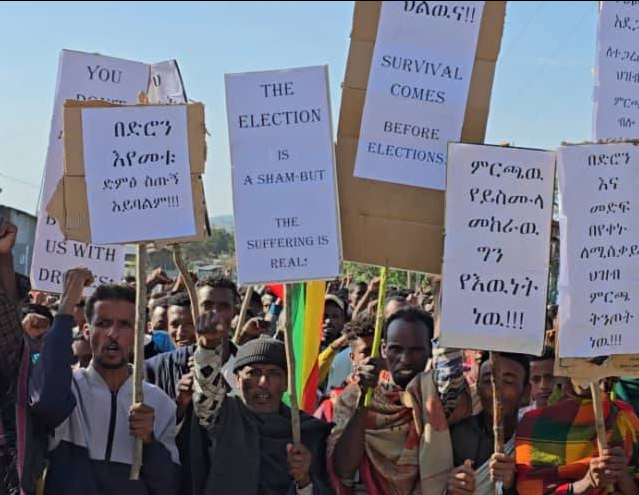
A massive wave of street demonstrations and a region-wide general strike paralyzed the Amhara region yesterday as tens of thousands of citizens launched a definitive rejection of the federal government’s plan to hold national elections this June. The protests, which were particularly concentrated in areas where Fano forces have consolidated control, represent a breaking point in the relationship between the Abiy Ahmed administration and Ethiopia’s second-largest region. In towns throughout Gojjam, Gondar, and Wollo, a total shutdown of businesses and transportation preceded the marches, signaling a population that no longer recognizes the federal government’s authority to conduct a vote.
The demonstrations were characterized by the dominant and haunting chant, “We will not enthrone our killers in the name of election,” a slogan that directly addresses the staggering civilian toll of the ongoing conflict. According to the Human Rights Watch 2026 World Report, federal forces have intensified an aerial campaign that has repeatedly struck non-combatants. Recent documented incidents include a drone strike in North Shewa that killed a pregnant woman and her young daughter in their home, and a February 20 attack in East Gojjam that killed 16 people, including children. Protesters carried placards stating “There can be no election when there is no peace,” arguing that the government’s focus on maintaining power comes at the cost of an existential threat to the Amhara people.
The timing of the unrest coincided with a stunning official intervention by the National Election Board of Ethiopia (NEBE), which confirmed reports of widespread illegal coercion by state actors. In an official press release, the Board denounced government cadres for conducting unauthorized door-to-door registration campaigns and threatening citizens with the loss of wages and social services if they refused to take voter cards. The NEBE specifically warned that it would “expose institutions and individuals” performing these illegal acts and stated that it may be forced to suspend elections in specific polling stations or entire regions where forced campaigns occur. This official acknowledgment has validated the claims of protesters who argue that the government’s reported membership numbers are manufactured through state-sponsored intimidation.
Yesterday’s events highlighted a stark divide between two versions of Ethiopia. While the ruling Prosperity Party and its “media army” organized rallies in Oromia and Benishangul-Gumuz to celebrate Prime Minister Abiy Ahmed’s eight years in power, the Amhara region was defined by a rejection of what analysts call “procedural authoritarianism.” Critics and international observers note that the destruction in Amhara—including the shelling of civilian infrastructure and the rise of ransom abductions—is believed to have surpassed the devastation of the Tigray war. Protesters made it clear that until drone strikes cease and security is restored, any attempt to hold an election will be viewed as a theatrical exercise intended to secure a fresh five-year mandate under the shadow of a humanitarian catastrophe.