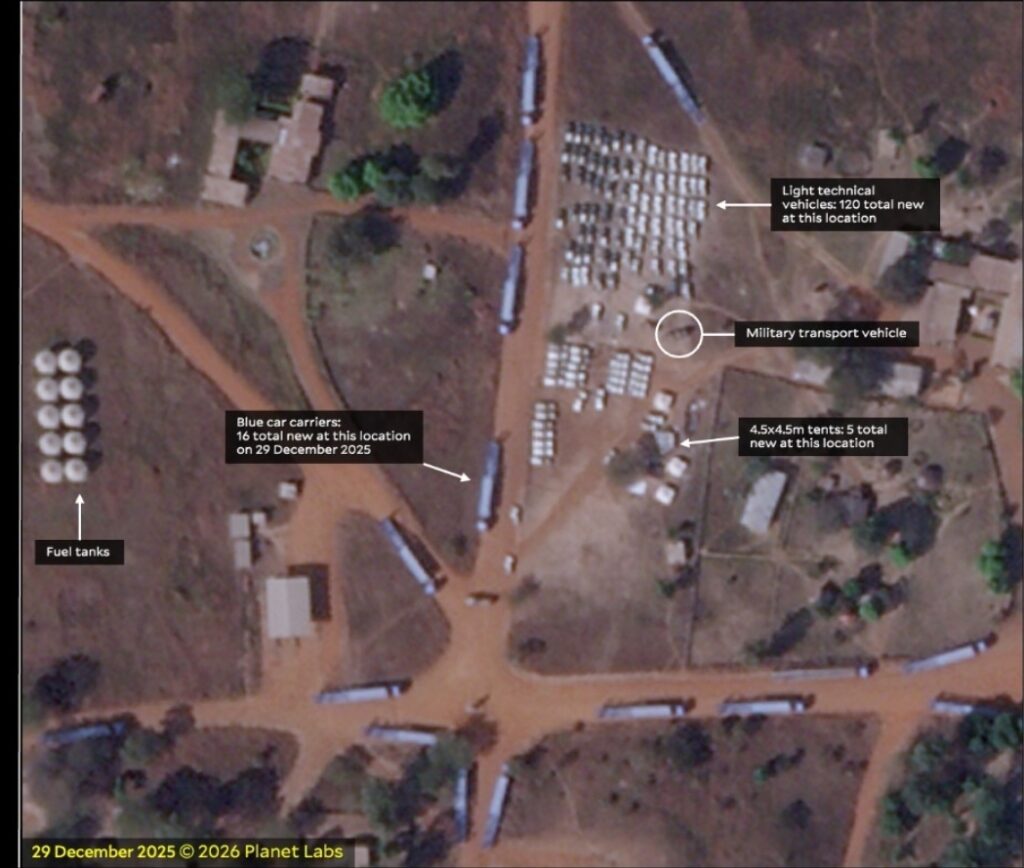
In a significant escalation of regional involvement in the Sudanese civil war, a new investigation has exposed a clandestine supply line funneling military hardware through the heart of Ethiopia to the Rapid Support Forces. Satellite data and logistics tracking now place an Ethiopian National Defence Force base in the western city of Asosa at the center of a sophisticated international operation designed to sustain the paramilitary group’s offensive in Blue Nile state. While Ethiopia has publicly maintained a stance of neutrality, the physical evidence tells a different story, revealing a high-tempo military hub where hundreds of technical vehicles are being processed, armed with heavy machine guns, and dispatched across the border.The trail of this military assistance extends far beyond the Horn of Africa, as researchers have successfully linked the vehicles seen at the Asosa base to shipments arriving from United Arab Emirates-run facilities in Somaliland. This corridor represents a strategic pivot for the UAE, utilizing its deepening economic and security ties with Prime Minister Abiy Ahmed’s government to establish a reliable staging ground as other regional routes face increased scrutiny. The impact on the ground in Sudan has been immediate and devastating, with the fall of the strategic border town of Kurmuk in late March attributed to RSF units operating vehicles and equipment identical to those documented at the Ethiopian base just days prior.This revelation shifts the understanding of the Sudanese conflict from a domestic power struggle to a proxy war fueled by a complex web of Middle Eastern and East African interests. As the RSF faces mounting international condemnation for atrocities and a declared famine in Darfur, the discovery of a dedicated logistics base on Ethiopian soil places immense pressure on Addis Ababa to explain its role in a war that has already displaced over eleven million people. By providing the RSF with a sanctuary for refueling, maintenance, and troop housing, the Asosa installation has effectively become an external engine for the paramilitary’s campaign, further dimming hopes for a negotiated peace and signaling a dangerous new chapter of regional instability.