Amnesty International has called for an independent investigation into possible war crimes following deadly artillery attacks on civilian neighbourhoods in Alamata, Southern Tigray, accusing the Ethiopian National Defence Forces (ENDF) and their allied Tigray Peace Forces (TPF) of carrying out indiscriminate shelling that killed civilians and injured many others during renewed fighting in September.
In a report published on November 23, the international human rights organization said it had independently verified the deaths of at least 14 civilians in four artillery attacks on Alamata between September 26 and 28, 2026. The attacks struck residential neighbourhoods, homes and commercial areas, raising serious concerns over the use of explosive weapons in densely populated civilian areas.
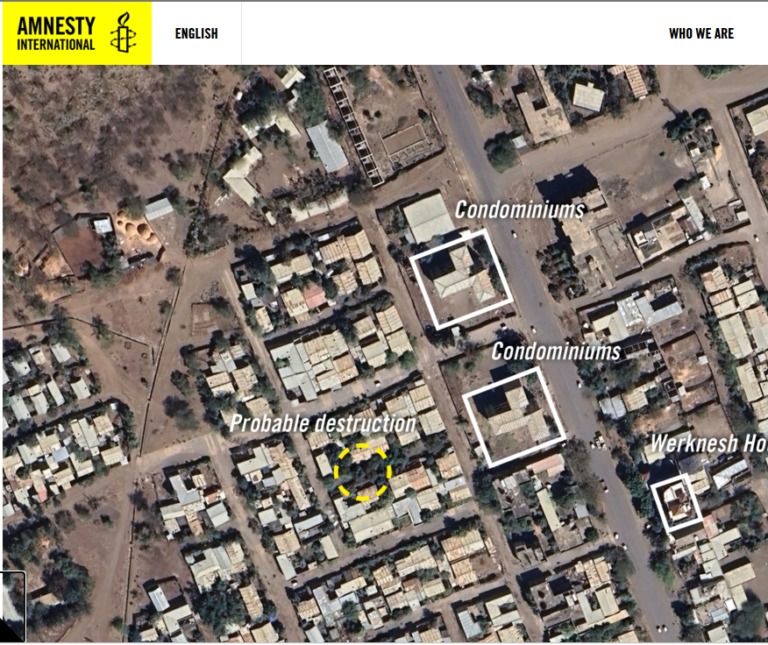
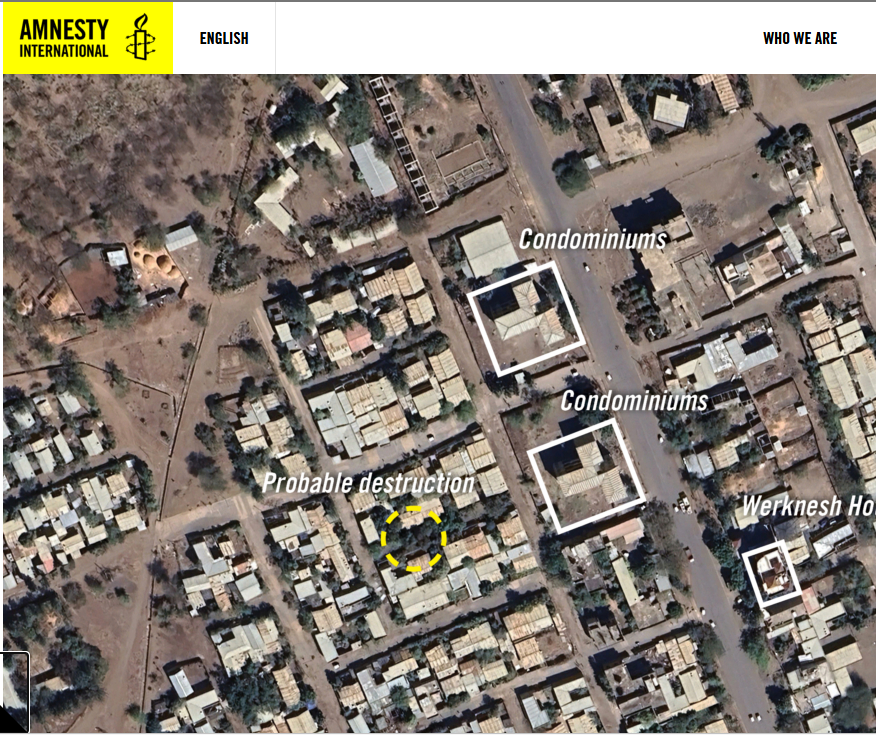
Amnesty’s investigation involved interviews with 28 people, including survivors, eyewitnesses, relatives of victims, humanitarian workers and medical personnel. Its Evidence Lab also analysed eight videos, 17 photographs and satellite imagery to corroborate accounts of the attacks and assess the destruction caused.
Among the deadliest incidents was an artillery strike on September 27 in the condominium neighbourhood of Kebele 04, where five houses were struck, killing seven people and injuring four others. Among those killed were a 26-year-old mother, her eight-year-old son and her 33-year-old brother. Another family living next door also lost four members, including a mother and her 14-year-old child.
A separate attack on September 26 struck a commercial area near a busy market, killing at least three people at a local establishment as residents gathered for the eve of the Meskel religious celebration. Other strikes hit residential homes in different parts of the city, adding to the civilian death toll.
According to Amnesty, evidence gathered from witnesses and individuals familiar with military movements identified the Waja and Timuga areas, approximately 13 kilometres south of Alamata, as the principal locations from which Ethiopian government forces and their TPF allies conducted the artillery bombardment. The two forces subsequently took control of Alamata from Tigrayan forces on September 28.
Yasmine Ahmed, Amnesty International’s Senior Director for Regional Human Rights Impact, said the repeated use of artillery in densely populated neighbourhoods, without adequately distinguishing between civilian populations and military targets, violates international humanitarian law and must be investigated as war crimes.
The organization also raised concerns over the conduct of forces affiliated with the Tigray People’s Liberation Front (TPLF), accusing them of establishing military positions in residential neighbourhoods and several schools before the renewed fighting erupted. Witnesses told Amnesty that some schools had been used as military bases and that TPLF fighters had operated from civilian areas.
However, Amnesty stressed that any violations committed by Tigrayan forces do not absolve Ethiopian government forces and their allies of their obligations under international humanitarian law or justify indiscriminate artillery attacks against populated areas.
The TPLF rejected the allegations against its forces in a four-page response submitted to Amnesty on November 18, describing them as unfounded and calling for a comprehensive, independent and impartial investigation. The Ethiopian National Defence Forces and the Tigray Peace Forces had not responded to Amnesty’s requests for comment by the time the report was published.
The latest findings have renewed questions about accountability for atrocities committed during Ethiopia’s northern conflict, particularly given years of international calls for independent investigations into serious violations of international humanitarian law. Amnesty’s demands for accountability are not new. During the 2020–2022 Tigray war, the organization repeatedly called for an independent international investigation into alleged war crimes and crimes against humanity committed by multiple parties to the conflict.
On March 4, 2021, Amnesty called on the United Nations to immediately establish an impartial international investigation into allegations of grave violations in Tigray, including potential war crimes and crimes against humanity. The organization argued that an investigation led by the UN, rather than one conducted jointly with Ethiopian government institutions, was necessary to establish the facts, preserve evidence and lay the foundations for accountability. At the time, Amnesty had documented alleged atrocities involving Ethiopian federal forces, Eritrean troops, Amhara regional forces and Tigrayan forces.
In February 2021, Amnesty published its investigation into the massacre in Axum, documenting the killing of hundreds of civilians by Eritrean troops in November 2020. The organization concluded that the mass executions could amount to crimes against humanity, while indiscriminate shelling by Ethiopian and Eritrean troops could constitute war crimes.
In April 2022, Amnesty International and Human Rights Watch released a major investigation documenting what they described as a campaign of ethnic cleansing against Tigrayans in Western Tigray. The report detailed unlawful killings, sexual violence, mass arbitrary detention, forced displacement and the systematic expulsion of hundreds of thousands of civilians by Amhara regional security forces and officials, with the acquiescence and possible participation of Ethiopian federal forces. The organizations concluded that the documented abuses amounted to crimes against humanity and war crimes.
On June 30, 2022, Amnesty further urged the International Commission of Human Rights Experts on Ethiopia, established by the UN Human Rights Council, to investigate atrocities committed by all parties to the conflict. The organization warned that communications restrictions and limited access for independent observers were severely obstructing the documentation of violations and efforts to establish accountability.
Despite these calls, accountability for serious violations committed during the war remained a major concern. The November 2022 Cessation of Hostilities Agreement between the Ethiopian federal government and the TPLF brought an end to the two-year conflict, but it did not resolve longstanding demands for justice for victims and survivors.
Amnesty’s investigations also continued after the peace agreement. In September 2023, the organization published further findings documenting extrajudicial executions, rape, sexual slavery and pillage committed by Eritrean forces in Tigray during the final days of negotiations for the agreement and in the months following its signing. It subsequently called for the preservation of evidence and renewed international efforts to ensure accountability.
The latest Alamata investigation therefore comes against a backdrop of repeated warnings by international human rights organizations that the failure to investigate and prosecute serious violations in Ethiopia risks perpetuating a cycle of impunity.
Amnesty is now urging the UN Human Rights Council to urgently establish an independent investigative mechanism capable of examining violations, identifying individuals responsible for crimes under international law and supporting efforts to bring perpetrators to justice. It has also called on Ethiopian authorities to grant independent international investigators, journalists and humanitarian organizations unhindered access to conflict-affected areas.
The organization maintains that accountability must extend to all parties responsible for violations, regardless of their political or military affiliation. For civilians in Tigray, however, the latest findings raise a familiar and troubling question: whether another round of documented atrocities will finally lead to independent investigations and meaningful accountability, or whether the demands for justice that accompanied the 2020–2022 war will once again go unanswered.