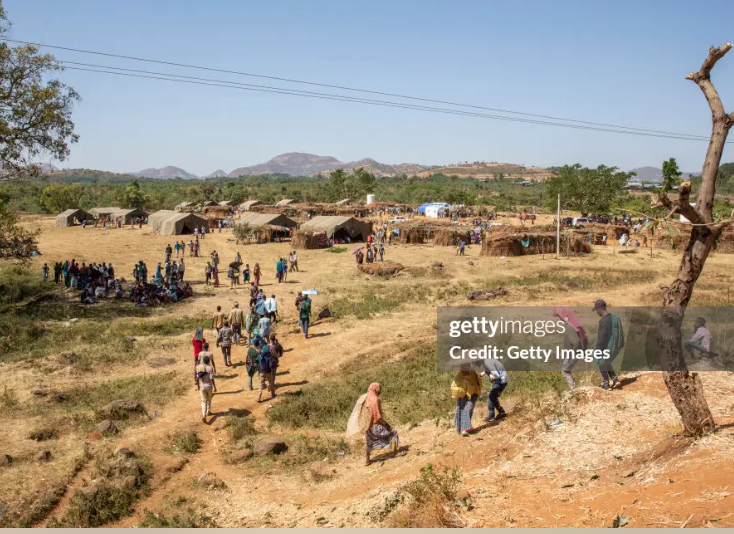
Residents in parts of the disputed Metekel area say regional security forces and allied militias have carried out a campaign of forced displacement, arson and looting that has left dozens homeless and families without food, shelter or access to basic services. According to reporting by Addis Standard, residents from kebeles in Dibate District—including people from Chati Kebele and localities such as Odo Aba Tafi, Damadasi and others—were ordered to vacate their homes about a month ago on the pretext of operations against the Oromo Liberation Army (OLA).
Displaced people told reporters they were driven into nearby towns such as Berbari and Galessa, while those who resisted the order said they were beaten. Witnesses described a subsequent “search operation” by the Gumuz Special Police and militias from the Bole area of Bulla District that began on 25–26 February 2026 and involved the burning of more than 80 houses in localities identified as Chokorsa and Dibachi, the looting of cattle and the destruction of crops and other property. One displaced household told reporters that 150 quintals of maize and their home were destroyed.
Those fleeing described harrowing conditions. Displaced families from the Chokorsa area said they are now living out in the open in an area called Mehal Gipo, with pregnant women, children and the elderly suffering illness and hunger. A father of six quoted in the reporting said he fled at the height of harvest to save his family and left behind crops that now lie abandoned or were burned; he said more than 84 houses he later saw had been torched. Local residents also told Addis Standard that further house burnings occurred on 10 March 2026 in neighboring Tuski.
District officials have rejected the complaints. Mulualem Wowaya, the administrator of Dibate District, told reporters that “no such grievance has reached us,” and the head of the regional communications bureau, Melesse Beyene, declined to comment. Humanitarian assistance, residents say, has not arrived.
The latest wave of attacks in early 2026 sits atop a long history of violence in the Metekel Zone. The area experienced a new upswing of insecurity beginning in May 2025 and has seen repeated episodes of killing, displacement and property destruction since 2019; reporting and regional summaries note that the zone’s proximity to the Grand Ethiopian Renaissance Dam has made it strategically sensitive and a focal point for competing armed groups and security operations. Analysts and local leaders have linked some of the earlier attacks to groups described by authorities as “anti-peace forces,” while residents on different sides of the conflict accuse each other and the security services of abuses.
Federal forces have presented their operations as counterinsurgency. In previous statements, the Ethiopian National Defense Force and regional military units said they were intensifying measures against “anti-peace” actors and announced seizures of weapons and equipment; those statements come as diplomatic tensions over the GERD have made the wider region politically fraught.
Observers and displaced residents warn that the pattern of forced removals, property destruction and the apparent targeting of communities accused of “feeding” armed groups risks entrenching a new humanitarian crisis and deepening local grievances. The Metekel Zone shares borders with the Amhara region, and control of territory and security in Metekel has long been contested between actors claiming affiliation with both the Amhara and the Benishangul-Gumuz Region administrations; displaced Amhara communities elsewhere in Ethiopia have also accused security forces of heavy-handed tactics, and residents and rights groups say the newest displacements risk replication of broader patterns of repression and reprisal.
In the absence of independent access and with local officials denying complaints, residents’ accounts and the physical evidence of scorched homes and lost harvests remain the principal record of what people in these kebeles say happened. The displaced families who spoke to journalists pleaded for immediate relief, protection and a credible investigation into the operations that left them homeless and hungry.