The recent release of hundreds of prisoners detained in connection with the conflict in Ethiopia’s Amhara region has been welcomed by families and supporters as an important development. However, the releases have also drawn attention to a smaller group of detainees who remain in prison after declining to accept the conditions attached to the pardon process.
Reports indicate that more than 300 detainees were released following rehabilitation programs and the signing of pardon-related documents, while approximately 30 others reportedly declined to sign and remained in custody.
The difference between these two groups is significant.
According to reports, detainees who accepted the process were required, among other things, to acknowledge wrongdoing and express an apology. Those who maintained that they were innocent and declined to make such an admission were not included in the releases.
This has raised questions about the relationship between the government’s pardon process and the unresolved criminal cases against some of the detainees.
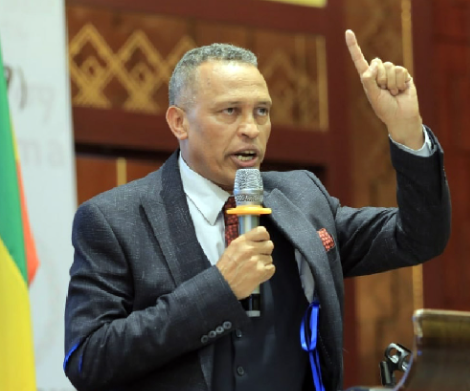
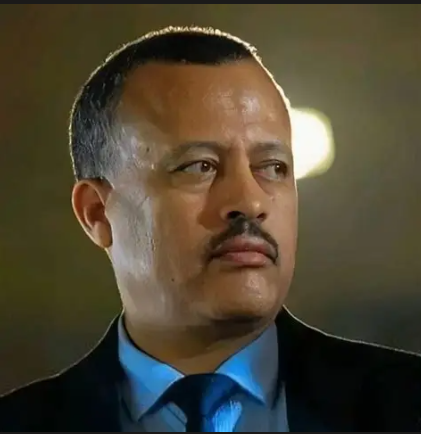
One of the more prominent cases is that of Yohannes Buayalew, a former member of the Amhara regional council. Buayalew was among a group of political figures and others arrested following the outbreak of fighting in Amhara in 2023. He was subsequently charged in a terrorism-related case, charges that he and his co-defendants have contested.
The legal history of the case is important. In 2024, the Federal High Court ordered prosecutors to amend the charges against Buayalew and former federal parliamentarian Christian Tadele and others. The prosecution subsequently appealed the decision to the Supreme Court.
This means that, at least in these cases, the allegations were subject to continuing legal dispute rather than having been conclusively established through a final conviction.
The recent pardon process has introduced a different mechanism for resolving the situation. Rather than waiting for the criminal proceedings to reach their conclusion, detainees were given an opportunity to obtain release by participating in a rehabilitation and pardon process.
For those who accepted, this resulted in freedom.
For those who refused to acknowledge the allegations against them, it did not.
This distinction has received considerably less attention than the overall number of prisoners released.
There is an important difference between being pardoned and being acquitted.
A pardon allows the state to forgive or set aside criminal liability. An acquittal, by contrast, follows a judicial determination that the prosecution has failed to establish guilt.
Consequently, the release of a detainee through a pardon does not necessarily establish that the original allegations were unfounded. At the same time, requiring a detainee to acknowledge wrongdoing as a condition of release does not establish that the allegations were proved in court.
This is particularly relevant to prisoners who continue to deny the charges.
If a defendant believes that the allegations against him or her are false, accepting a document that acknowledges responsibility can be difficult to reconcile with the defense presented in court.
That appears to be one reason some detainees have declined the offer.
Buayalew’s case illustrates the issue.
As a former regional council member, his detention attracted attention from the beginning. His subsequent prosecution placed him among a wider group of political figures and others accused of involvement in the conflict.
Yet the proceedings did not produce a straightforward resolution. The dispute over the charges reached the appellate level, while the defendants continued to contest the allegations.
Buayalew is now reportedly among those who have not accepted the government’s pardon terms.
His case, together with those of the other detainees who remain imprisoned, raises a relatively straightforward question: What should happen to someone who refuses to admit to an offense because he maintains that he did not commit it?
There are two possible approaches. The government can continue the prosecution and seek to establish its case in court, or it can resolve the matter through a political pardon.
What is more difficult to justify is a situation in which a prisoner remains incarcerated primarily because he refuses to acknowledge guilt that has not been established through a final judicial ruling.
The release of hundreds of prisoners is undoubtedly significant. But the number released does not tell the entire story.
The remaining detainees provide an important perspective on how the government is attempting to resolve the broader political and legal issues created by the Amhara conflict.
The central issue is therefore not whether the recent releases should be welcomed. They should.
The question is whether the same process provides a satisfactory resolution for those who maintain their innocence and refuse to make an admission of guilt.
For people such as Yohannes Buayalew and the other detainees who remain in custody, that question remains unresolved.
A complete account of the recent releases therefore requires looking at both groups: those who accepted the pardon and returned home, and those who declined its conditions and remain behind bars.
Until the legal status of the remaining detainees is clarified, the recent releases should be viewed as an important development—but not necessarily the conclusion of the Amhara political-prisoner issue.