Abiy Ahmed’s party governs 438 of 486 contested seats, presides over a currency in freefall and a famine in the making, and has just silenced another newspaper. What, exactly, did the landslide buy?
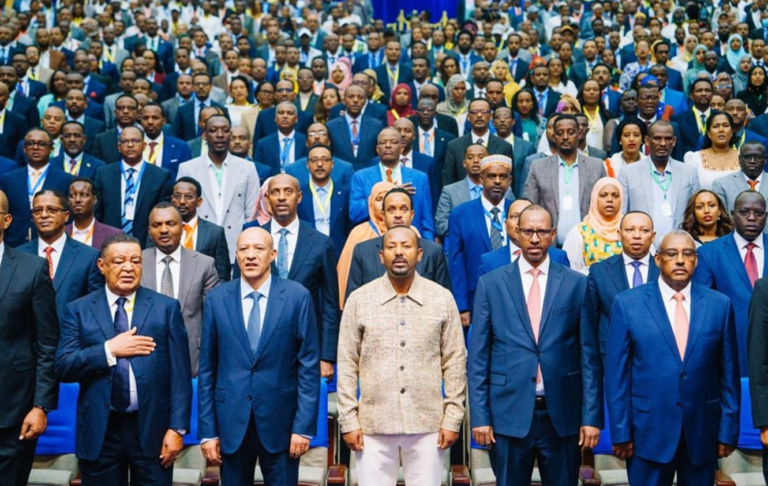
There is a particular kind of confidence that comes from winning 438 seats out of 486. The Prosperity Party has it. What it does not have, five months after the vote, is a country that is quiet.
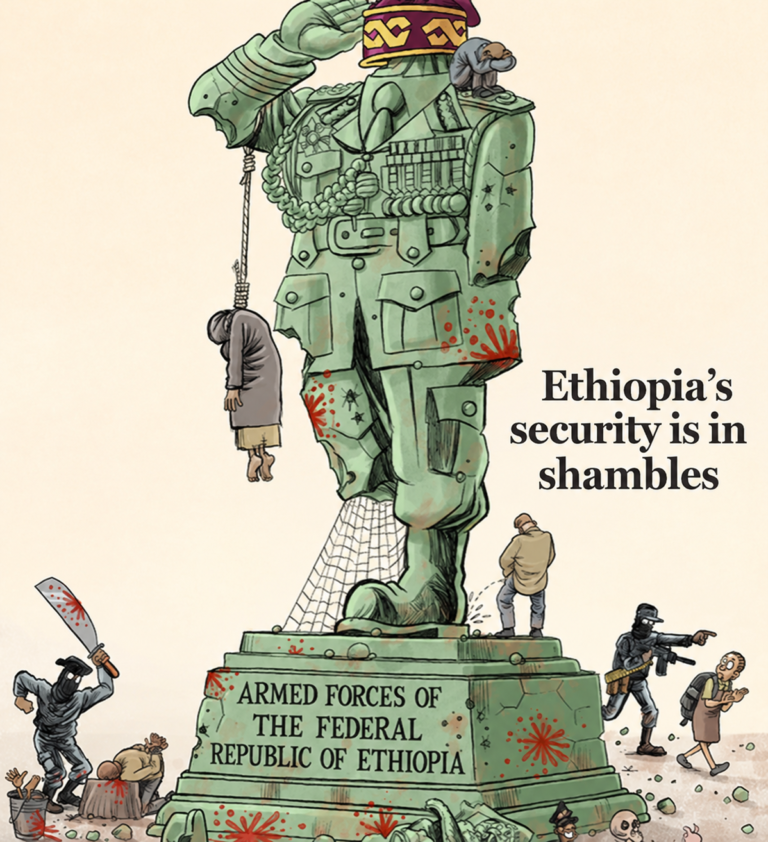
As of this week, the Ethiopian National Defense Force is trading artillery with Eritrean forces around Badme, hunting Tigray Defense Forces fighters in the hills above Rama and Adigrat, and skirmishing with Amhara Fano militiamen on the B31 highway outside Debre Werq. Curfews are in force in Mekele, Shire, Abiy Addi and Idaga Hamus. In Shire, soldiers shot three people dead for breaking one.
This is the record on which Prime Minister Abiy Ahmed’s government asked for another five years.
An election nobody could quite reach
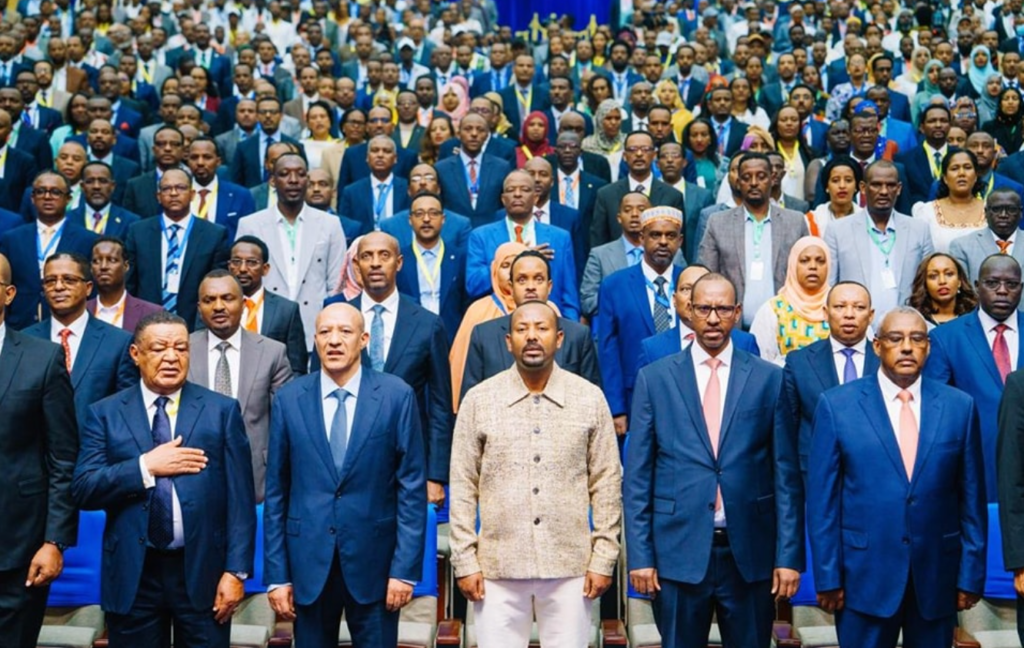
The June 1 poll was, by the government’s telling, a triumph of participation. The National Election Board reported turnout of 94 percent later revised in its own figures to 95.7 percent with more than 51 million votes cast from a registered roll of 54 million. Prosperity Party candidates campaigned on food security and on growth the government projects will exceed 10 percent this year.
Look closer at the map and the picture curdles. No voting took place at all in Tigray, meaning all 38 of its federal seats went unfilled, alongside eight constituencies in Amhara, five in Oromia and others elsewhere: 61 seats in total simply not contested. Voting was interrupted at 143 polling stations by security incidents. African Union and IGAD observers, whose presence lent the exercise international respectability, were largely confined to the capital; both missions were criticized for not deploying across the country.
Opposition figures did not bother with diplomatic language. “The government had an overwhelming advantage while opposition members were harassed and did not stand a chance,” Yitayal Assefa, who ran under the All Ethiopia Unity Party banner and lost, told The Associated Press. Opposition parties accused the state of arresting their leaders and hobbling their campaigns through legal maneuvers. In Addis Abeba, competition actually narrowed: 16 candidates won by margins above 50 percent.
The result was a supermajority in a parliament that does not elect the prime minister by popular vote but does decide whether he stays. It also clears the road for the constitutional rewrite Abiy’s critics have long expected a shift to a presidential system that could keep him in office until 2037.
The war it said was over
The November 2022 Pretoria agreement was supposed to have ended the Tigray war. In late September, federal forces launched what the government insists on calling “law enforcement operations against the defunct TPLF.” Within weeks, Addis Abeba had installed a new Interim Regional Administration in Mekele, placed Tigray under a federal command post for six months, and promised a regional election by April 2027 a vote that will be held under the supervision of the same board that could not organize one in June.
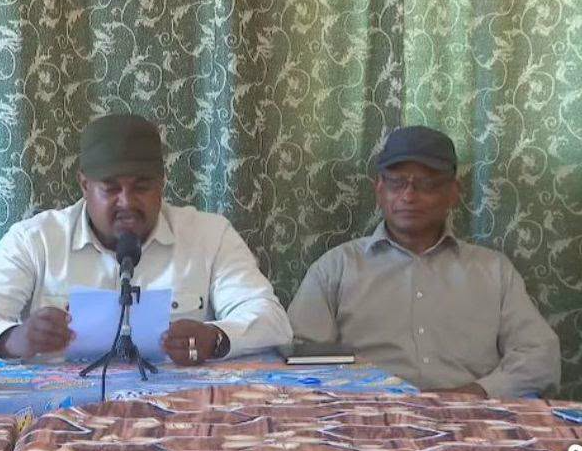
ENDF Chief of Staff Birhanu Jula, addressing “religious leaders, elders and youth” in Mekele on November 13, accused the TPLF of trying to pry Tigray out of Ethiopia in league with Eritrea, and accused Egypt of supplying the rebels. Asmara denies Eritrean troops are even on Ethiopian soil. The G7 has warned of escalation. The UN Secretary-General’s envoy for the Horn, Guang Cong, is shuttling between the parties and has now spoken by phone to Zemene Kassie, head of the Alliance for Survival rebel coalition, who wants the UN to sponsor a national dialogue rather than another round of enforcement.
A hunger crisis with a government logo on it
The most damning document of the season is not a rebel manifesto. It is FEWS NET’s October outlook, published on November 10, which projects Emergency IPC Phase 4 food insecurity across parts of Tigray, Amhara and Afar from February 2027. The kiremt rains failed at historic levels, with deficits exceeding half the average across large swathes of the country. The meher harvest, which supplies more than 85 percent of national crop production, is delayed and far below average. Crop losses in East and West Hararghe are estimated above 40 percent.
Weather is only half of it. FEWS NET explicitly blames renewed fighting for severing trade routes, farm labor and income. And it blames the state’s own safety net: public works transfers under the Productive Safety Net Programme have been largely suspended since January 2026, and in Tigray the programme is expected to stay suspended until at least May 2027 the exact region the government has just reoccupied. Food assistance reached just over 700,000 people in September, a 73 percent collapse from August.
The government’s growth figures the double-digit number touted on the campaign trail look increasingly theoretical to a household that has replanted twice after failed germination and is now selling eucalyptus poles for maize.
The economy: a float that sank
The July 2024 decision to float the birr, taken under IMF pressure, was the government’s signature reform and its most politically expensive one. The currency has since lost well over 100 percent of its value. Inflation, which had briefly dipped to single digits, climbed back to 11.7 percent in April, and the IMF’s own program documents project 14 percent before a hoped-for decline. External debt stood at $34.4 billion in December 2025. In early 2026, the Official Creditor Committee co-chaired by France and China declined the Eurobond restructuring terms on the table.
Growth has been real in the aggregate, and economists do credit liberalization with drawing investment and export earnings. But debt restructuring reallocates claims between creditors; adjustment reallocates income inside Ethiopia downward, onto wage earners whose salaries inflation has eaten for years. The beneficiaries of the reform are visible in Addis Abeba’s new towers. Its casualties are visible in the bread queues.
The press, again
On November 2, the Ethiopia Media Authority suspended The Reporter indefinitely, ordering one of the country’s last independent outlets off print, broadcast and online until “legal and professional ethical obligations are fully met.” The regulator said the paper had “repeatedly” published content that “contradicts Ethiopia’s national interests” and distorted information harming investment, tourism and diplomacy a standard elastic enough to cover most of what a newspaper does.
It follows the February revocation of Addis Standard’s licence, the June expulsion of the La Croix correspondent, and the detention of five journalists, four of whom have been held nearly three years on terrorism charges carrying the death penalty. Ethiopia now sits 148th of 180 in RSF’s index, its score falling to 34.66. Abiy has defended arrests of online creators by saying they needed to be “rebuked and advised.”
What the government says
None of this is uncontested. Ministers point to a genuine diplomatic achievement in the Grand Ethiopian Renaissance Dam, to roads and industrial parks, to a projected growth rate among the fastest on the continent and to the fact that a country that suffered repeated famines now claims improved food security. They argue that insurgencies in Amhara and Oromia are the work of armed minorities who lost at the ballot box and refused to accept it, and that Eritrea not Addis Abeba is the revisionist power on the border.
There is force in parts of that. The Fano and the Oromo Liberation Army are not democrats by instinct, and Asmara has its own agenda.
But the aggregate case is harder to make now than it was in June. A party that controls parliament, the regional administrations, the security architecture and the regulatory bodies also owns the outcomes. Three simultaneous wars, a food emergency forecast for the second winter running, a currency in pieces, and a newspaper silenced in the same week that artillery fell on Badme.
The Prosperity Party asked for a mandate to finish what it started. It has one. What it does not have, and cannot print on a ballot, is the excuse that someone else is in charge.