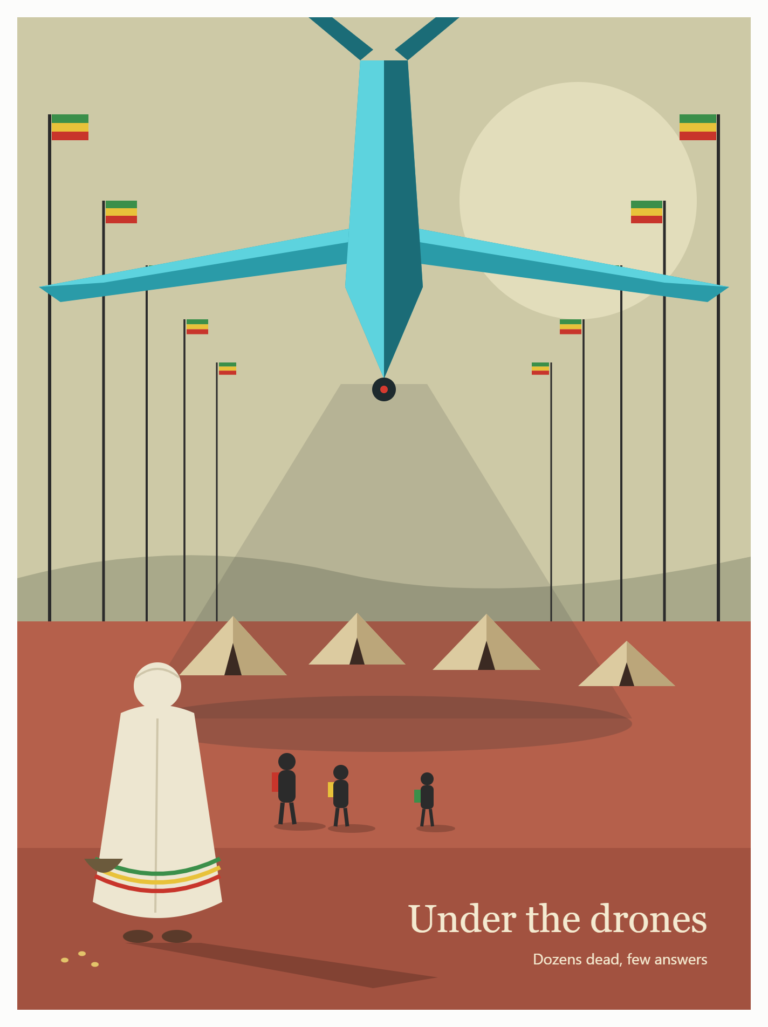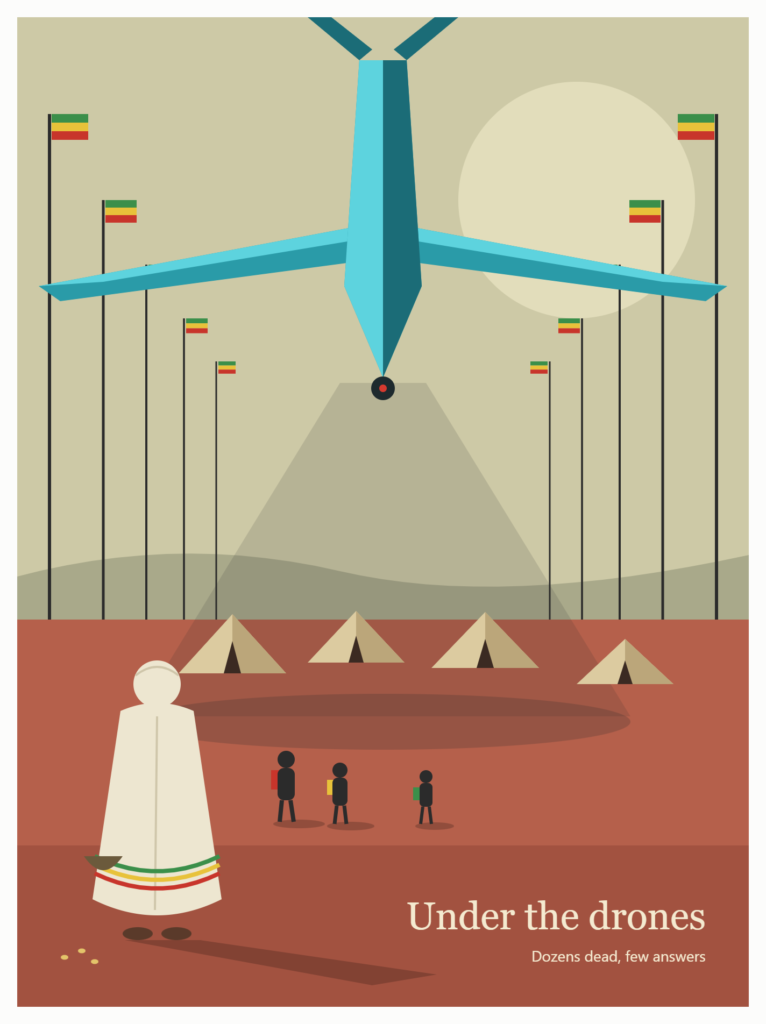
The people in the Amhara camp had already lost their homes once. Many had fled violence in neighbouring Oromia and ended up in a place meant to be safe, a crowded camp where, by one account, about 1,800 people were living with growing shortages of food and medicine. Then the drones came.
Meseret Media, which first published the account on 30 October, says four strikes hit the camp in quick succession, just as children were walking home from school. Eyewitnesses and residents told the outlet that the dead included children, pregnant women and a foreign humanitarian worker who was there on an aid mission. Two medical professionals backed up the account. Residents interviewed by other outlets said the victims included three pregnant women, an 8-year-old girl and several students, and that 22 others were wounded.
The wounded now face a camp with little to treat them. Meseret Media’s sources say the destruction was extensive, and residents fear the number of dead will keep rising as the injured fight for their lives.
Meseret Media reports that the pain did not stop in Amhara. In the Tigrayan town of Rama, residents describe two attacks that, taken together, are among the most disturbing details in the reporting. A drone first hit a private vehicle loaded with grain at night. By morning, hungry civilians had gathered to collect what had spilled. A second strike hit them where they stood. Meseret Media says at least 25 died immediately, and local medics and residents fear the toll could climb much higher. The outlet also reports a similar attack a few days earlier on people collecting grain elsewhere in Amhara, a sign that the search for food has itself become dangerous.
None of this is an isolated tragedy. Addis Standard reported that drone strikes on 20 October killed schoolchildren and other civilians, including at Sana Elementary School in Amhara. A humanitarian source and a witness said a strike on a displacement camp in Tigray killed at least eight people. Residents also said another drone strike in Tigray killed four people, two of them children. Across these accounts, the people dying are students, mothers-to-be, displaced families and villagers looking for something to eat.
The accusations point at the federal government and its forces, which are fighting rebel groups in a conflict that has intensified in recent weeks. Meseret Media says neither the army nor the air force has responded to the allegations. That silence leaves families without answers about who ordered the strikes, what the targets were, or whether anyone will be held to account.
Reporting from both regions is hard. Access is restricted and communications are unreliable, so much of what is known comes from survivors, local medics and aid workers who saw the aftermath firsthand. Independent investigators have not yet reached the sites. What those witnesses describe, however, is consistent across accounts: families burying children, a camp left without enough food or medicine, and people killed while doing the most ordinary things, like walking home from school or picking up grain.
Meseret Media warns that military movements near the border could threaten the fragile peace and force still more civilians from their homes. For the people already living in camps, that would mean losing everything a second time.