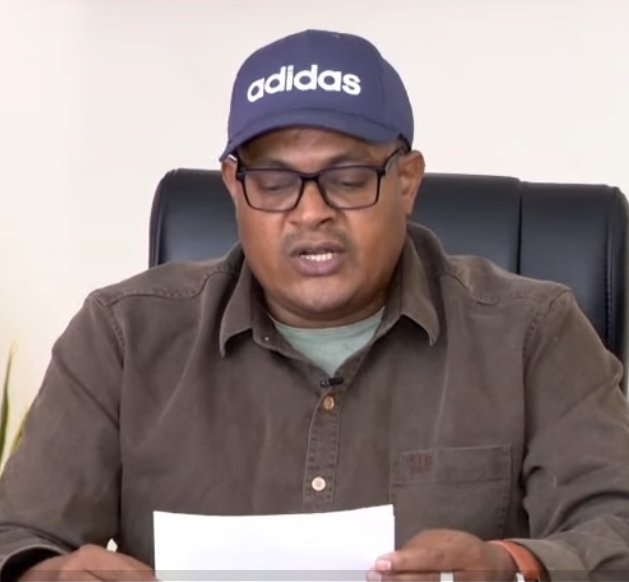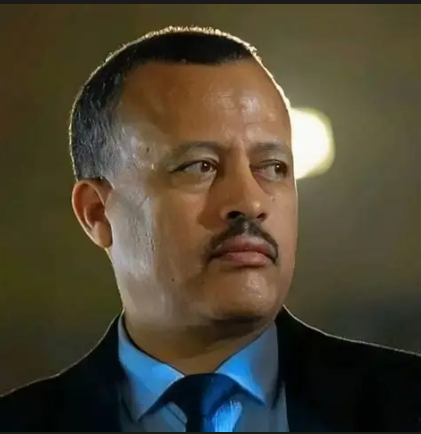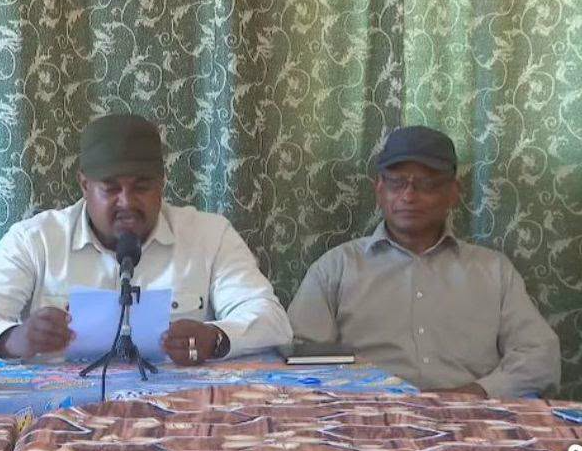
The coalition fighting Prime Minister Abiy Ahmed’s government has a new plan and a new look. In its second televised message, the Alliance for Survival showed its members on camera for the first time, including TPLF chairman Debretsion Gebremichael, as it announced that its council had approved a medium-term action plan.
The sixth regular council meeting ran from 30 to 31 October. The alliance said it reviewed developments at the global, regional and national levels before signing off on the plan, which it says is meant to answer an existential threat facing Ethiopia’s peoples.
The plan has three main parts. The first is closer cooperation among the member groups and a stronger ability to take what the alliance calls practical measures against the government. The second is coordination of opposition activity inside Ethiopia and among diaspora communities. The third is more diplomatic and media work, including outreach to political parties, civil society, scholars, diplomats and the governments and peoples of the Horn of Africa.
The alliance also repeated that its goal goes beyond removing the current government. It says it wants an inclusive transition built on the consent of Ethiopia’s peoples, with parties, civil society and public institutions taking part throughout.
As in earlier statements, the alliance blamed the Prosperity Party government for wars in Tigray, Amhara, Oromia and elsewhere, and accused it of stirring up conflicts between communities in several other regions. It also alleged that the government is pushing domestic conflicts into confrontations with neighboring countries. It urged the international community to take note and work with the coalition on human rights and peace. These are the alliance’s own claims, and the report on the statement does not include a response from the government.
The alliance has seven members: the Amhara Fano National Movement, the Oromo Liberation Army, the TPLF, the Ogaden National Liberation Front, the Afar National Unity Revolutionary Front, the Benishangul Peoples’ Liberation Movement and the Gumuz Peoples’ Democratic Movement. It was formally announced on 20 September and brings together former battlefield rivals.
Since then, fighting has intensified in parts of Afar, Amhara and Tigray, and tensions have risen between Ethiopia and its neighbors, particularly Eritrea. The Ethiopian government has accused neighboring countries of backing the alliance, which has further strained relations in the region.
For now, the statement sets out priorities rather than concrete steps. It names no timelines, meetings or specific diplomatic targets, so how much changes on the ground and in the capitals the alliance wants to reach will only become clear in the weeks ahead.