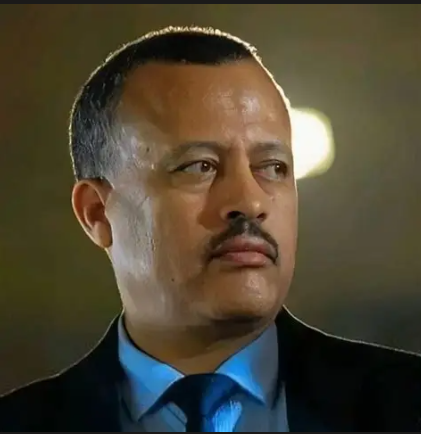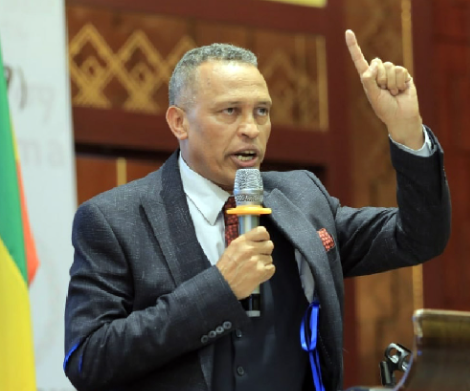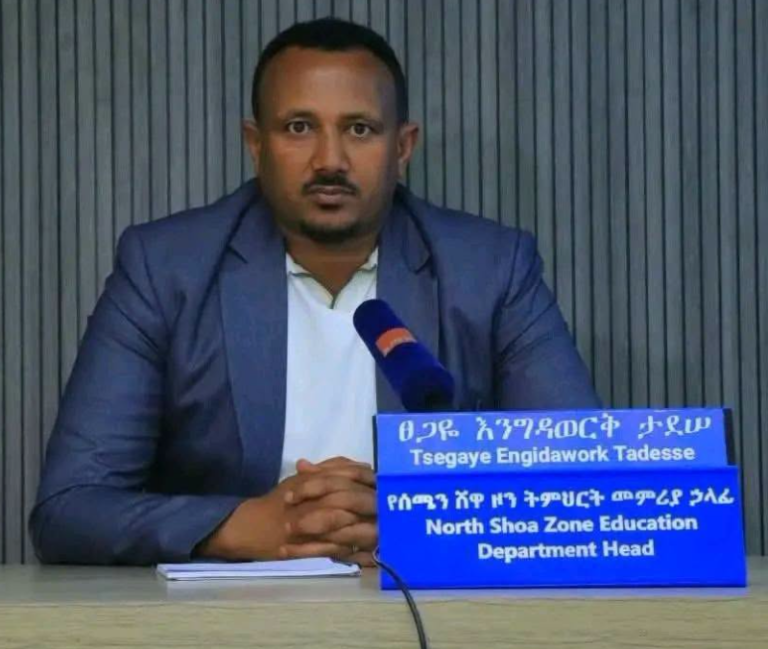
Ethiopia is entering another potentially consequential period of political and military uncertainty following the formation of a new alliance bringing together seven political and armed organizations opposed to Prime Minister Abiy Ahmed’s government. The coalition includes the Tigray People’s Liberation Front (TPLF), the Amhara Fano National Movement, the Oromo Liberation Army (OLA), the Ogaden National Liberation Front (ONLF), the Afar Revolutionary Democratic Unity Front, also known as Ugugumo, the Benishangul Peoples’ Liberation Movement and the Gumuz Peoples’ Democratic Movement. The organizations announced the alliance on September 20, 2026, describing it as the Ethiopian Peoples’ Forces Alliance for Survival and declaring their intention to work together against the current federal government and ultimately establish an inclusive transitional government.The announcement is significant not simply because of the number of organizations involved, but because several of the principal members were recently fighting one another. The TPLF and Fano were on opposite sides of the devastating Tigray war that began in 2020. Fano forces fought alongside Ethiopian federal forces and Eritrean forces against the TPLF and Tigrayan forces during that conflict. Today, representatives of the TPLF and Fano are part of the same political alliance. The development demonstrates how dramatically Ethiopia’s political alignments have changed since the signing of the 2022 Pretoria agreement that ended the main phase of the Tigray war.The new relationship between the TPLF and Fano does not mean that their underlying disputes have disappeared. One of the most sensitive unresolved questions remains the status of Western Tigray, a territory claimed by both Tigrayan and Amhara actors. The area became one of the central territorial disputes of the Tigray war and remains deeply connected to the political relationship between the two communities. The alliance’s founding statement says disagreements among its members should ultimately be resolved through political and constitutional processes, but it does not provide a detailed settlement for these longstanding territorial questions.The Oromo Liberation Army adds another dimension to the coalition. The OLA has fought the Ethiopian government for years in Oromia, Ethiopia’s largest regional state by population and a region that surrounds much of the country’s political and economic center. Unlike the TPLF and Fano, whose most significant recent wars have been concentrated in northern Ethiopia, the OLA operates in the central part of the country. Its participation therefore potentially gives the new alliance a presence across several strategically important regions rather than concentrating opposition activity in one geographic area.The geographic spread of the seven organizations is one of the alliance’s potentially important characteristics. The TPLF is rooted in Tigray, Fano in Amhara areas, the OLA in Oromia, the ONLF in the Somali Region, and the other organizations represent communities and territories in Afar and Benishangul-Gumuz. In theory, simultaneous political and military pressure from several directions could force the federal government to divide its security resources across a very large territory. However, geographic spread also presents a major logistical problem. The organizations are separated by large distances and have different military structures, political objectives and local circumstances. There is currently no publicly established evidence demonstrating that they possess a single integrated military command capable of directing all seven organizations as one army.The distinction between a political alliance and a unified military organization is therefore essential. The groups have clearly declared their intention to cooperate and have indicated that military cooperation could form part of their relationship, but a formal alliance does not automatically create a common command structure, integrated communications system, shared logistics network or coordinated battlefield strategy. Evidence of simultaneous joint operations, a unified military council or common external weapons supply would provide much stronger evidence that the alliance had developed into an integrated military force.The timing of the announcement is particularly important because relations between the Ethiopian federal government and the TPLF have deteriorated significantly. The Pretoria peace agreement ended the principal phase of the Tigray conflict but left several major political and territorial disputes unresolved. In 2026, tensions again escalated, with the TPLF reasserting political control in Tigray and accusing the federal government of violating commitments connected to the peace process. The Ethiopian government has in turn accused the TPLF of threatening national stability. The renewed confrontation has created the possibility that the northern Ethiopian conflict could again become a major military crisis.The emergence of the seven-member alliance could therefore change the strategic calculations surrounding a renewed Tigray conflict. If the TPLF were to become involved in sustained fighting with federal forces while Fano and the OLA simultaneously increased their military activity in their respective regions, the federal government could face the problem of fighting multiple insurgencies at the same time. That does not mean that such coordination will occur, but the possibility is one of the reasons the new alliance has attracted significant attention.The political objectives announced by the alliance are broader than simply defeating the current government. Its founding statement calls for the establishment of an inclusive transitional government, an end to Ethiopia’s armed conflicts, protection of political and human rights, economic stabilization and an inclusive political and constitutional process. The alliance presents itself as a national political alternative rather than merely a military pact between regional armed groups.That claim will face a major test because the organizations involved do not have identical visions for Ethiopia. The TPLF has historically defended a strong conception of Tigrayan political autonomy within Ethiopia’s federal system. Fano’s political agenda is closely connected to Amhara political and territorial concerns. The OLA’s struggle is centered on Oromo political rights and self-determination. The ONLF has historically advocated for Somali political interests and self-determination. The other organizations similarly represent distinct regional and communal interests. These differences concern fundamental questions about the structure of the Ethiopian state, territorial administration and the distribution of political power.For that reason, the alliance currently appears to have a stronger common position on what it opposes than on precisely what political system should replace it. The organizations have agreed that the current federal government should be challenged and that their differences should eventually be addressed through political negotiations. Whether that formula is sufficient to maintain unity under military pressure remains uncertain.Another major question concerns Eritrea. The Ethiopian government has accused Eritrea of supporting Ethiopian opposition groups and has alleged that the newly announced alliance has received Eritrean financial backing. Eritrea has denied such accusations. There have also been reports of contacts between Eritrean officials and Ethiopian opposition organizations, including claims that Eritrea has provided assistance to some groups. However, allegations of contact or support should not automatically be interpreted as evidence that Eritrea controls the alliance or directs its military activities. Those are substantially different claims and require separate evidence.Sudan is another important factor because of Ethiopia’s western border and the continuing collapse of Sudanese state authority caused by its own civil war. Reports have indicated that Sudan has played a role in facilitating meetings involving Ethiopian opposition organizations and Eritrean representatives. The instability in Sudan could potentially provide opportunities for weapons trafficking, movement of fighters, informal supply networks and other forms of cross-border activity. At the same time, the existence of those opportunities does not by itself establish that the seven organizations have developed a common external supply system.The most important question surrounding the alliance is therefore whether its members can overcome their own differences long enough to coordinate effectively. The history between the TPLF and Fano demonstrates how quickly alliances in Ethiopia can change. Groups that fought each other only a few years ago are now cooperating because they perceive the current political situation as a greater common threat. That cooperation could be temporary, or it could evolve into a much more durable political and military arrangement.There is also a historical precedent for broad alliances among Ethiopia’s armed opposition movements. In 1991, a coalition led by the TPLF played a central role in overthrowing the Derg government. That coalition brought together organizations representing different ethnic and regional constituencies and eventually became the basis of the political order that governed Ethiopia for nearly three decades. The current alliance is not identical to the coalition of 1991, and there is no basis for assuming that history will repeat itself. The comparison is nevertheless important because Ethiopia has previously experienced the transformation of regional armed movements into a coalition capable of fundamentally changing the country’s political structure.The government’s response will be equally important. Addis Ababa can portray the new alliance as a collection of armed organizations attempting to overthrow the constitutional order, while the alliance presents itself as a national movement seeking to create a transitional political system. How Ethiopia’s population, neighboring governments and international powers interpret those competing narratives could influence the coalition’s ability to obtain political legitimacy and external support.The central uncertainty is therefore not whether the seven organizations have formed an alliance. They clearly have. The more difficult question is what that alliance actually represents in practical terms. If the members develop a common command structure, coordinate military operations, establish reliable supply networks and maintain cooperation despite their territorial disputes, the alliance could represent a substantial change in Ethiopia’s internal security environment. If they remain primarily separate organizations cooperating politically against a common government, its military significance could be considerably more limited.The most revealing test will likely be the relationship between the TPLF, Fano and OLA. These three organizations possess substantially greater political and military significance than several of the smaller members, and they operate in strategically important parts of Ethiopia. Their ability to cooperate despite their conflicting histories and political objectives will determine much of the alliance’s practical strength.Ultimately, the formation of the seven-member coalition reflects a profound realignment in Ethiopian politics. Former enemies have found a temporary common cause in opposition to the federal government, while Ethiopia simultaneously faces renewed tensions in Tigray, continuing armed conflict in Oromia and Amhara regions, and a broader regional environment shaped by instability in Sudan and tensions involving Eritrea. The alliance could become the foundation for a wider armed confrontation, or it could remain a fragile political arrangement whose members eventually return to pursuing separate objectives.The most important question is what happens if the alliance succeeds in weakening the current government. Removing or destabilizing a government is fundamentally different from agreeing on what comes afterward. The seven organizations represent different communities, territorial interests and political visions. Their ability to negotiate those differences peacefully would ultimately determine whether their new alliance becomes a mechanism for political transition or another stage in Ethiopia’s long cycle of armed competition over power, territory and the structure of the state.