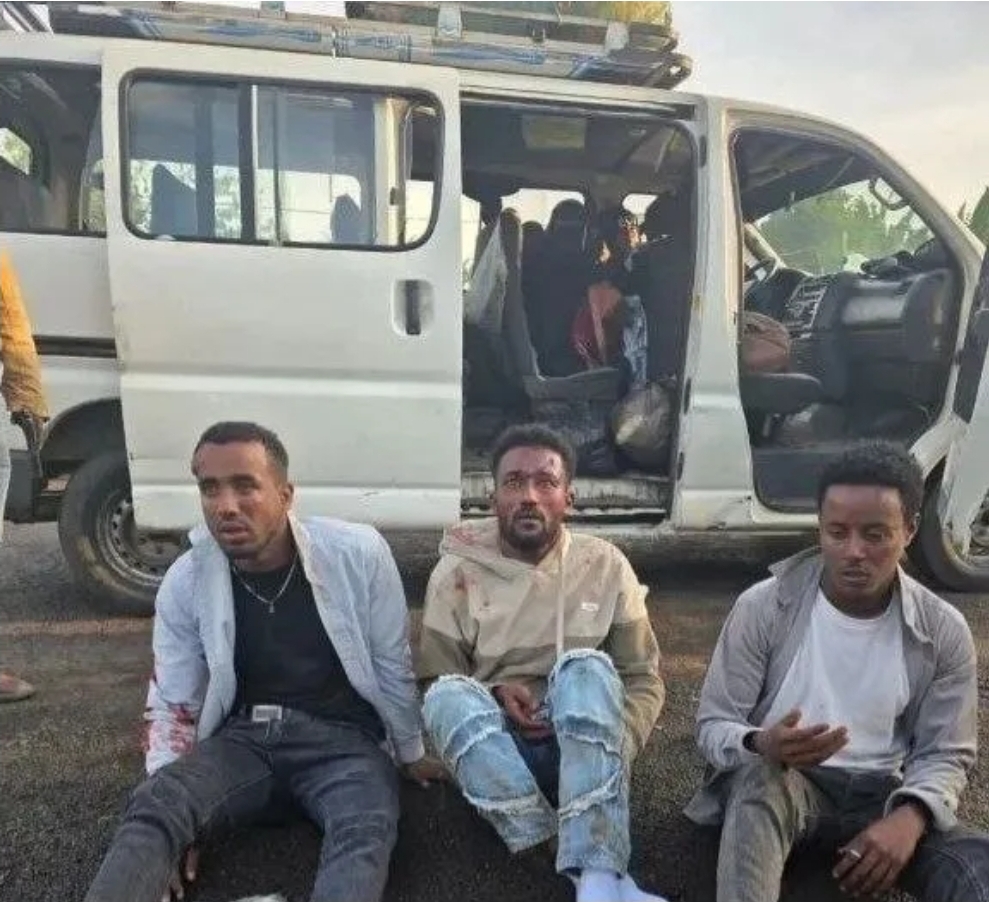
The recent extrajudicial execution of three young men in the Abeshge Woreda of the Gurage Zone marks another grim escalation in a pattern of horrific violence, arbitrary detentions, and identity-based targeting across Ethiopia. The summary execution of Temesgen Getachew, Yitagezu Asegidew, and Gizaw Girmaye—who were forcibly removed from public transport, bound, shot in the head, and left exposed for days—highlights an alarming breach of both national constitutional guarantees and international humanitarian law. Human rights defenders emphasize that these act cannot be dismissed as isolated missteps by security personnel, as they reflect a systemic breakdown of due process in state enforcement operations.International monitors, including Amnesty International and Human Rights Watch, have repeatedly raised concerns regarding state-led campaigns targeting Amhara civilians under the pretense of security operations against insurgent groups. The mechanism behind these abuses often begins with identity-based profiling, where young men traveling through or residing in conflict-adjacent areas routinely face summary accusations of affiliation with non-state armed groups. Under standard human rights protocols, any individual suspected of an offense is entitled to immediate notification of charges, protection from physical mistreatment, prompt presentation before an independent judicial authority, and the presumption of innocence. When federal security forces and local administrative militias bypass the judiciary to carry out field executions, it represents an absolute collapse of the rule of law. Furthermore, denying families the right to retrieve and bury the deceased—leaving bodies exposed as a form of collective intimidation—violates fundamental humanitarian standards regarding the dignified treatment of the dead.This horrific act in the Gurage Zone occurs against a backdrop of widespread enforcement actions across the region. Rights groups have documented the operation of makeshift detention camps where thousands of civilians, including students, academics, and young workers, have been held without formal charge or legal representation. Human rights organizations and civil society groups continue to call on the Ethiopian federal government to immediately halt extrajudicial operations, enforce strict command accountability over state security personnel, grant unrestricted access to neutral international investigators, and dismantle non-sanctioned detention sites. Without immediate, concrete measures to curb extrajudicial operations and hold security forces accountable, the cycle of identity-based profiling and state-sanctioned violence risks further destabilizing the region and deepening the humanitarian crisis.